Premiere of the 2026 Global Open Source Development Report (Preview Edition), Revealing New Trends in Global AI Open Source

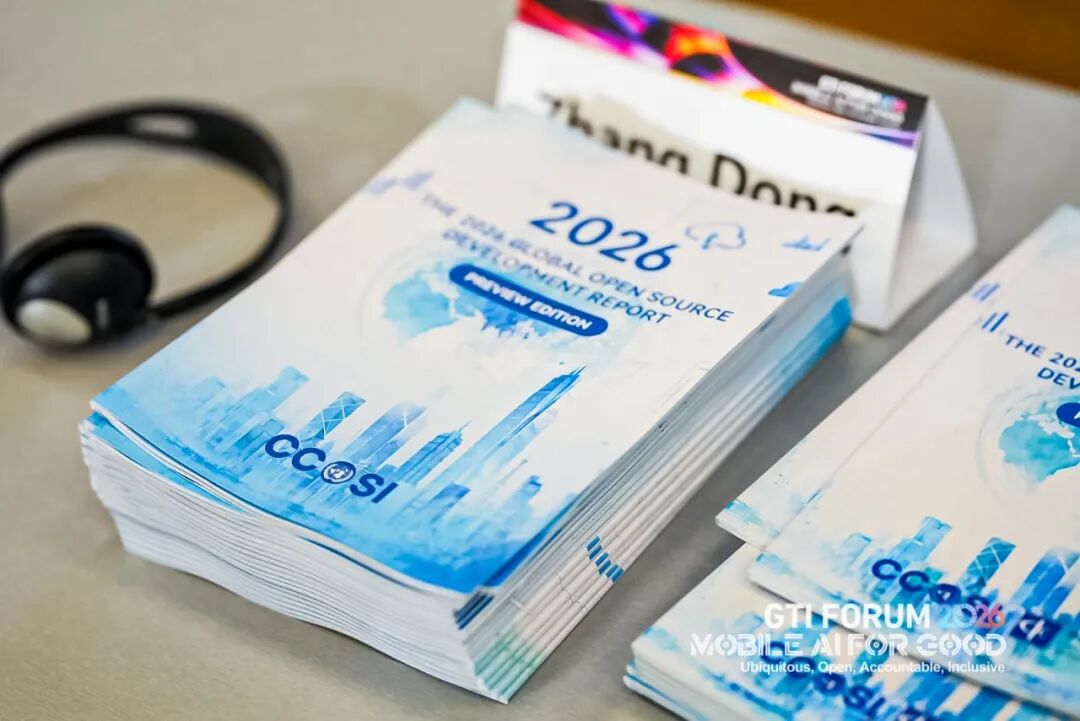
The Open Source Voice at the UN Geneva Summit: Premiere of the 2026 Global Open Source Development Report (Preview Edition) Reveals New Trends in Global AI Open Source.
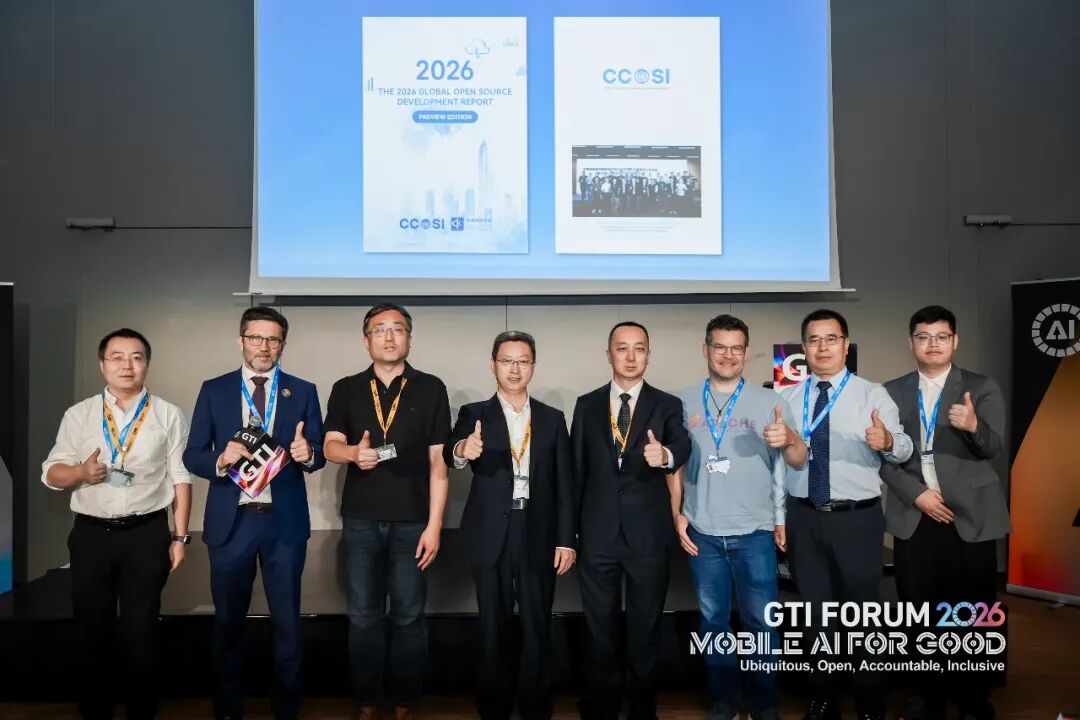
On July 9, during the United Nations’ “AI for Good” Global Summit, the Committee on Consultative Relations with the UN for Open Source Innovation under the China Association for Science and Technology (CCOSI) officially released the 2026 Global Open Source Development Report (Preview Edition). This version compiles core data and insights into the current global open source ecosystem. The complete edition will be formally launched at the Third Open Source Technology Academic Conference (OSTAC 2026) later this year in November.
Report Release: Providing a “Health Checkup” for the Global Open Source Ecosystem
Against the backdrop of artificial intelligence technology profoundly reshaping the global industrial landscape, open source has become the core engine driving technological innovation and knowledge sharing. However, as the open source ecosystem grows increasingly vast and complex, how to objectively and scientifically assess its development trends has emerged as a critical challenge for both industry practitioners and policymakers.
The 2026 Global Open Source Development Report (Preview Edition) was developed precisely to meet this need. Relying on cross-platform data and multi-dimensional quantitative analysis provided by the OpenDigger open source project, led by East China Normal University, the report aims to provide an objective and neutral “health checkup” for the global open source ecosystem, offering data support for policy-making, technological research and development, and community building.
Key Insights: Five Major Trends Outline a New Landscape for Global Open Source
This report focuses on the strategic role of open source technology in global sustainable development. Drawing upon the framework of the United Nations Sustainable Development Goals (SDGs), it innovatively proposes the “Open Source Development Goals” (OSDGs) analytical framework. This framework aims to evaluate how open source empowers global digital governance, promotes social equity, and drives sustainable innovation, thereby providing a new theoretical perspective for understanding the evolution of the current open source ecosystem.
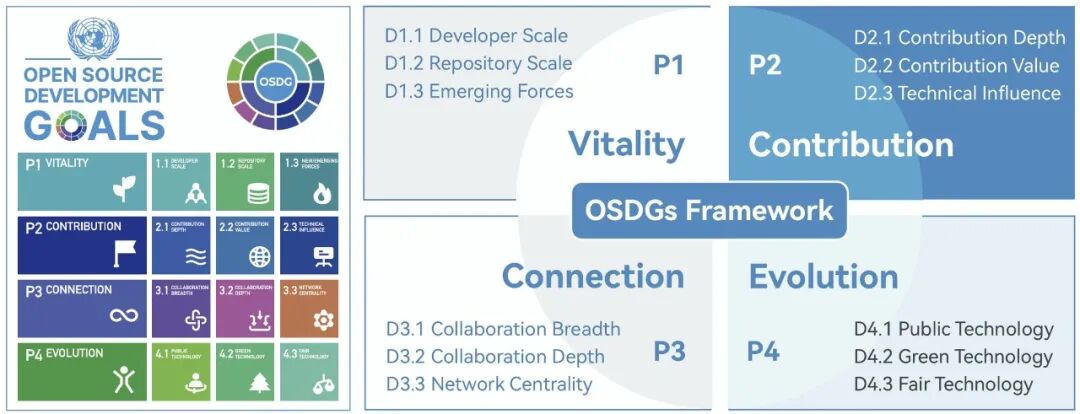
Based on this framework, although the preview edition represents only a phased achievement, it clearly outlines the following five core trends:
- Open source innovation is becoming increasingly globalized and multipolar. The distribution of influence among global open source projects shows a multipolar pattern: the United States and China remain firmly at the forefront, while Europe and Canada maintain strong activity levels. Participation from emerging countries such as India and Brazil continues to rise. Open source innovation is no longer a “solo performance” by a few nations but a technical collaboration involving developers worldwide.
- The center of gravity for global open source growth continues to shift toward Asia. Emerging economies represented by China have significantly increased their contribution, demonstrating outstanding developer retention capabilities. As of June 2026, there were over 2.3 million active developers on GitHub from China, ranking third globally. When integrating domestic platforms such as AtomGit and Gitee, the total scale exceeds 3.6 million, ranking second globally.
- AI has become the primary driver of open source growth. Code contributions in the field of artificial intelligence have seen explosive growth, accounting for more than 40% of the total increase across all major technical fields globally. The maturation of open-source large language models and Agent toolchains is driving competition beyond mere project quantity, evolving into a contest of ecosystem organizational capabilities and industrial implementation capacity.
- Model open sourcing presents new governance challenges and opportunities, with China leading the global inference market. Model open sourcing has evolved from technical sharing into a complex governance issue. In 2025, Hugging Face added 1.17 million new models. Chinese vendors such as DeepSeek, Qwen, Moonshot, and Z.ai accounted for over 70% of the global open-source model inference market share. Their overall download volumes and community interaction metrics rank among the highest globally, marking the acceleration of open-source models toward becoming “industrial mainstream.”
- Open source governance is moving from “technical collaboration” to “ecosystem co-construction”. As AI deeply embeds itself into critical infrastructure, open source has become a governance issue concerning global digital security and equity. Facing the risk of fragmentation, building inclusive, fair, and unified collaborative mechanisms to balance technological innovation with social impact has become an international consensus.
Data Foundation: OpenDigger Ensures Objectivity of the Report
It is worth noting that the data foundation for this report comes from the OpenDigger open source project. As infrastructure for the global open source ecosystem, OpenDigger provides solid data support for the report through continuous data collection and analysis. This model of “using open source projects to support open source research” is itself a vivid embodiment of the spirit of open source collaboration.
Professor Wang Jianmin, Chairman of CCOSI, pointed out during the report’s release that a scientific and transparent evaluation system is a prerequisite for guiding the rational allocation of open source resources. The release of the 2026 Global Open Source Development Report marks an important step forward for China’s open source forces in the fields of “measurement” and “evaluation.”
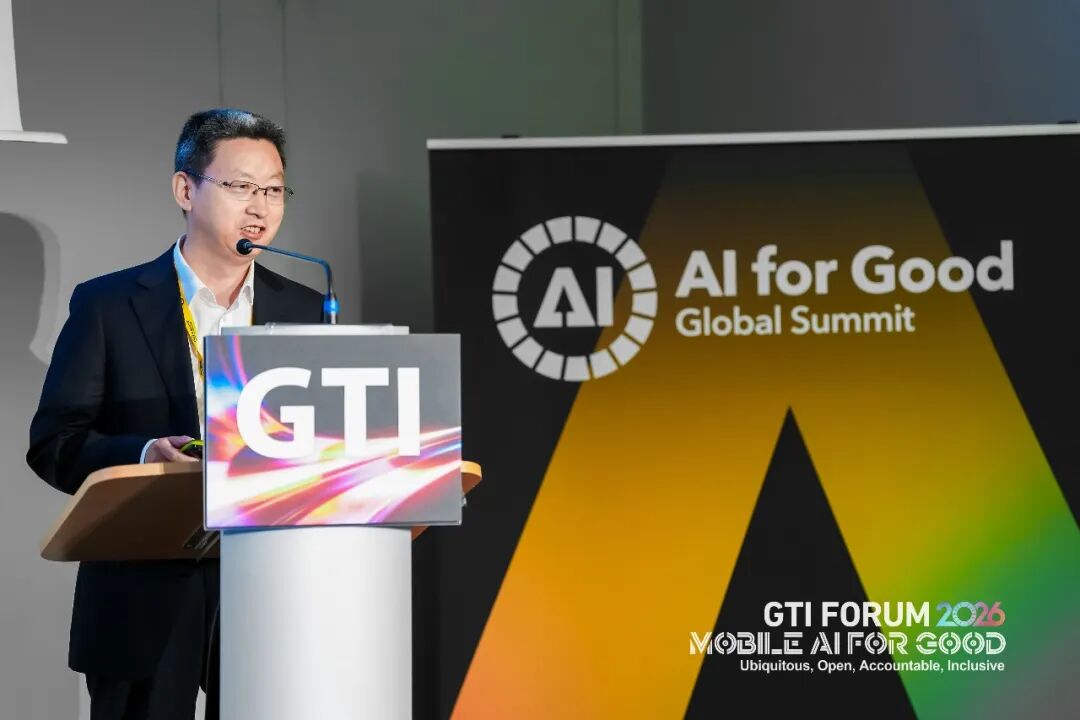
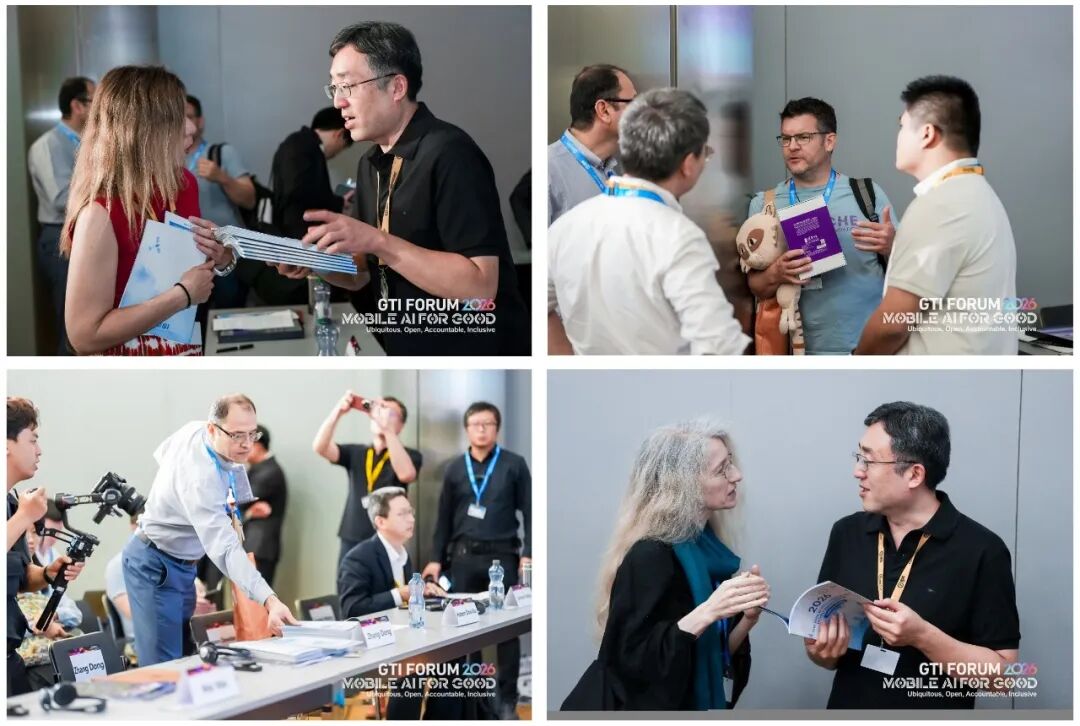
During the subsequent AI for Good themed press conference, the preview edition of this report sparked enthusiastic responses and in-depth exchanges among attendees. Leaders from China’s Ministry of Industry and Information Technology, along with experts and observers from UN agencies, various national governments, international organizations, and tech enterprises, highly praised the report’s forward-looking perspective and robust data. Participants generally agreed that the OSDGs framework provides a new benchmark for measuring the social value of open source. The report not only reveals China’s rise within the global open source ecosystem but also offers highly valuable “Chinese solutions” and “open source wisdom” for global digital governance and cooperation.
Outlook: Moving from “Preview” to Global Consensus
The release of the 2026 Global Open Source Development Report (Preview Edition) is merely a starting point. The Committee on Consultative Relations with the UN for Open Source Innovation under the China Association for Science and Technology will subsequently solicit feedback widely from the global open source community, academia, and industry to continuously refine the report’s content. The complete edition, along with a supporting high-quality Open Source Development Index (OSIDX) dataset, will be released within the year.
Under the framework of the UN’s “AI for Good,” this report is not only a phased summary of China’s open source strength but also an open invitation to the global open source community. We look forward to working with global partners, using data as the foundation and openness as the bridge, to jointly promote the construction of a more inclusive, fair, and trustworthy global open source AI ecosystem.
About CCOSI (Committee on Consultative Relations with the UN for Open Source Innovation)
The Committee on Consultative Relations with the UN for Open Source Innovation (CCOSI), under the China Association for Science and Technology (CAST), was established with the approval of CAST. Leveraging CAST’s Special Consultative Status with the United Nations Economic and Social Council (ECOSOC), CCOSI serves as a key mechanism for CAST to promote international cooperation in the field of open source within the global science and technology governance framework. The Secretariat of the Committee is hosted by the China Institute of Communications (CIC). Its daily operations are based at East China Normal University. The Committee aims to mobilize expert resources from both domestic and international communities to actively engage in agenda-setting and policy dialogues related to open source innovation within the United Nations and other relevant international organizations.
About UNOSI
ChinaUNOSI China serves as the Chinese hub for the United Nations Open Source Institute for Digital Commons (UNOSI) initiative, dedicated to advancing collaborative development of open-source infrastructure, coordinated governance of the digital commons, and capacity building in the Global South. Through a “Hub-and-Action Network” model, we connect developers, enterprises, universities, and international organizations. Anchored in three pillars—observability infrastructure, governance frameworks, and talent ecosystems—we translate China’s practices in “AI+” and open-source innovation into shareable, reusable global public goods, contributing to an open, equitable, and inclusive digital future for the 21st century.